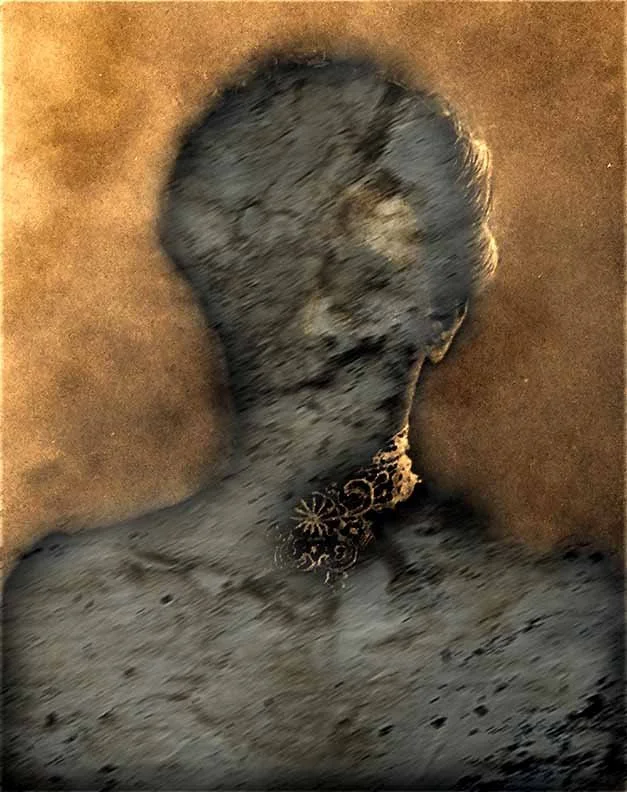
Her name is Sarah Bailey McKinney. She was born in 1844 to a marble cutter, an old resident of the county and a church member. Her mother: Elizabeth.
Birth unknown.
Death unknown.
Sarah did not marry until the age of 30. A spinster, some would have called her, though she did not spin. She cut spartre, she shaped wire, stitched wire to frame, draping silk velvet and facing the brim. She was a milliner.
A craftswoman.
An artist.
“Portrait”
Series in Progress: Visible Means of Support

She began her apprenticeship in millinery at age 16 in a town four counties from her home, lodging with a shoemaker and his family. Millinery, she knew—her father knew—would make a more respectable profession than teaching. Still, the hours were long…she’d spent enough nights asleep under the work table, especially when ladies needed hats at Easter or against the autumn chill.
“Apprenticeship”
Series in Progress: Visible Means of Support
After nine years of marriage, in 1883, Sarah’s husband Joseph died of Bright’s disease, an incurable kidney condition. During the War of 1861, he had lost a leg.
“Wounded at Liberty Gap Tennessee June 24 1863. Gunshot would of right thigh. Operation performed about 6 hours after injury, on the field.”
Sarah applied for a widow’s pension in 1884, but Joseph had “died from causes that could be traced directly to injuries received or disease contracted while in Union army service." So Sarah was not entitled.
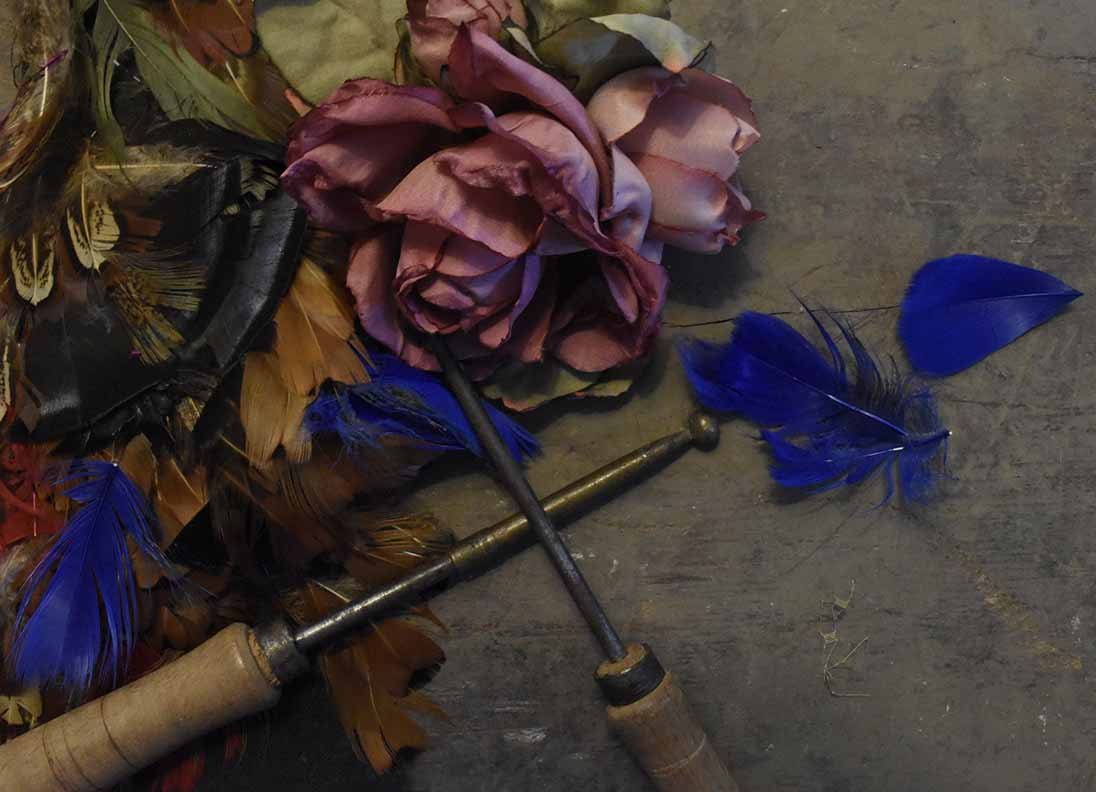
Sarah, a trained milliner, opened a shop of her own. She had to succeed. She’d given birth to a son with Joseph. There were societies that watched mothers like her, mothers who might be deemed financially unable to care for a seven-year-old child. Every hat she trimmed, every flower she molded stood as an act of resistance.
“Molding Flowers”
Series in Progress: Visible Means of Support
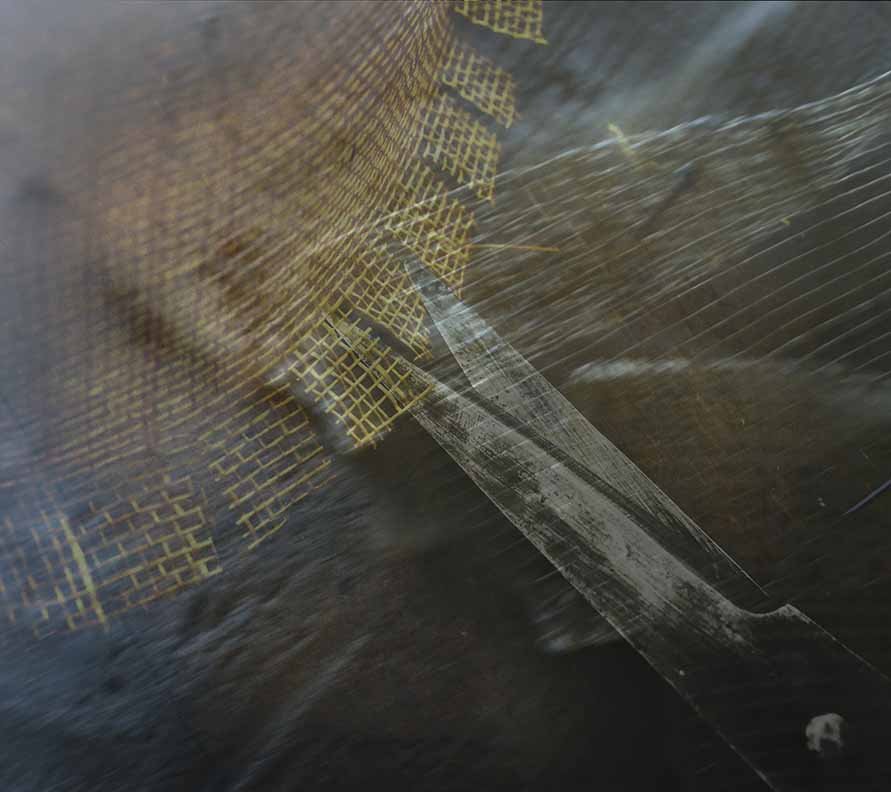
“Notching the Edges”
Series in Progress: Visible Means of Support
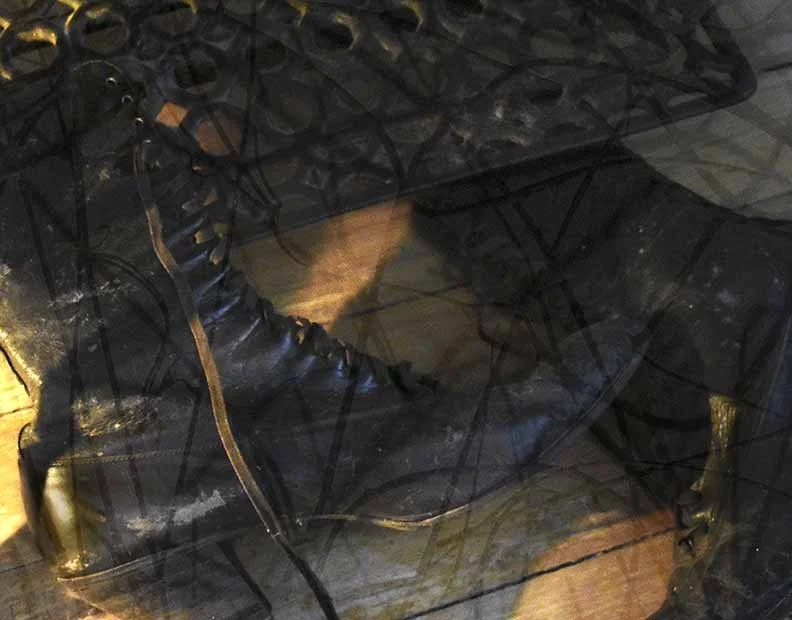
“Six Days Out of Seven”
Series in Progress: Visible Means of Support
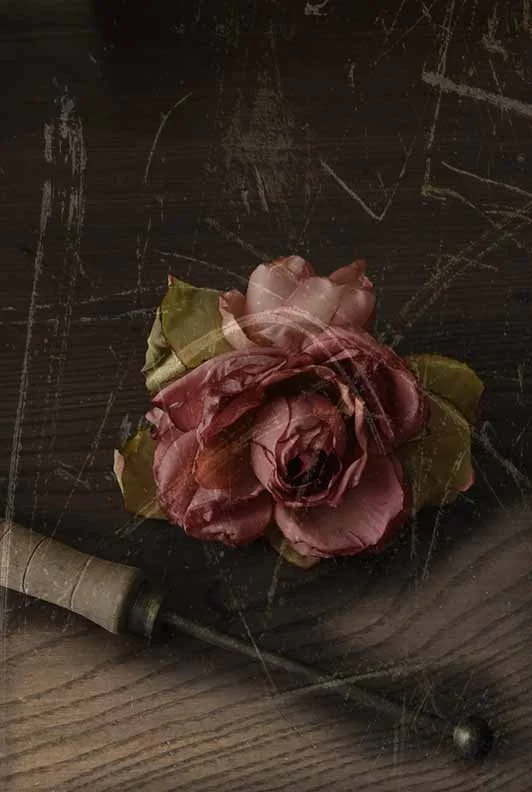
Shaping the Bloom
Series in Progress: Visible Means of Support
to be continued…


Limn
From upcoming 2027 exhibition at The Arts Federation, Lafayette, Indiana photobook: At Four O’Clock Add Flour


Joy Ride
From upcoming 2027 exhibition at The Arts Federation, Lafayette, Indiana


Her Demesne
From upcoming 2027 exhibition at The Arts Federation, Lafayette, Indiana


That Depression
From upcoming 2027 exhibition at The Arts Federation, Lafayette, Indiana


Like Poison
From upcoming 2027 exhibition at The Arts Federation, Lafayette, Indiana

Turn to Inside
From upcoming 2027 exhibition at The Arts Federation, Lafayette, Indiana